
India’s agriculture industry is built on a foundation of trust, relationships, and local influence. While innovation in seeds, fertilizers, crop protection, irrigation, and farming equipment continues to grow, the success of agricultural brands still depends heavily on the strength of their distribution ecosystem.
Unlike many industries where brands directly influence the end buyer, agriculture operates through multiple relationship layers. Dealers, retailers, distributors, field representatives, and local influencers often play a major role in shaping product decisions at the farmer level.
A farmer selecting a seed variety, fertilizer, or crop protection solution frequently depends on recommendations from a trusted local retailer who understands regional crops, soil conditions, and previous product performance. This makes channel partners much more than sales intermediaries. They become important contributors to brand trust and market adoption. However, this ecosystem is becoming more competitive.
Today, the same dealer may represent multiple seed companies. The same retailer may recommend competing fertilizer or agrochemical brands. Channel partners have more choices, and brands are competing not only for shelf space but also for attention, recommendation, and preference.
Traditional dealer schemes and seasonal incentives continue to support sales. But agriculture brands are increasingly realizing that long-term channel growth requires deeper engagement beyond transactions. This is where modern agriculture loyalty programs are evolving from reward distribution models into structured channel engagement ecosystems.
The Changing Agriculture Channel Landscape in India
India remains one of the largest agricultural economies in the world. The sector contributes nearly 18% to India’s GDP and supports around 45% of the workforce. With millions of farmers depending on agricultural products and services, the role of the distribution network becomes extremely important.
For decades, agriculture companies have built their channel strategy around distributor relationships, dealer networks, field teams, and trade schemes. These systems helped brands expand reach across rural and semi-urban markets. However, expansion alone is no longer the biggest challenge.
Many established agriculture brands already have large channel networks. The new challenge is improving productivity, engagement, and loyalty within those networks. A company may have thousands of registered dealers, but business performance depends on questions such as:
- How many dealers actively recommend the brand?
- Which retailers consistently participate in campaigns?
- Which partners support new product launches?
- Which regions show declining engagement?
Traditional sales reports provide visibility into transactions. They often fail to explain the behaviors behind those transactions. Modern agriculture loyalty programs help brands bridge this gap by creating continuous engagement with channel partners and generating better insights into partner activity.
Why Traditional Agriculture Dealer Incentive Models Need to Evolve
Dealer incentives have always been an important part of agriculture sales strategy. They encourage performance, support seasonal campaigns, and help brands maintain strong relationships with distribution partners.
The challenge is not that incentives have stopped working. The challenge is that incentives alone are no longer enough.
In competitive agriculture markets, most channel partners work with multiple companies. A retailer selling crop protection products may receive schemes from several brands during the same season. A dealer may evaluate different companies based on margins, product demand, availability, service quality, and relationships.
When every company competes through incentives, rewards become easier to compare and replace. A stronger scheme may create short-term preference, but it does not always create long-term commitment. This is why agriculture brands are shifting their focus from only rewarding sales performance to building stronger partner relationships throughout the year.
The Hidden Cost of Poor Channel Partner Engagement in Agriculture
One of the biggest challenges in agriculture distribution is inactive or low-engagement partners.
Many brands invest years building dealer and retailer networks. However, not every registered partner contributes equally to growth. Some actively promote products, participate in campaigns, and support farmer education, while others remain connected only during high-incentive periods.
This creates hidden inefficiencies. Brands may continue investing in expanding networks without maximizing the potential of existing partners. Poor channel engagement can affect multiple business areas, including product launches, market penetration, secondary sales growth, and brand recommendation.
For example, launching a new seed variety or crop protection product requires more than distribution availability. Dealers and retailers must understand the product, trust its value, and confidently recommend it to farmers.
A more engaged channel network improves not just sales volume but also the quality of market execution.
From Sales-Based Rewards to Behavior-Based Agriculture Loyalty Programs
The future of agriculture loyalty programs is moving from rewarding only outcomes to encouraging the behaviors that create those outcomes. Sales will always remain an important measurement. However, many actions that influence sales happen before the final purchase.
A retailer who completes product training can provide better recommendations. A dealer who participates in brand activities develops stronger confidence. A distributor who receives regular communication understands business priorities better.
Modern agriculture loyalty programs encourage valuable partner actions such as product learning, digital participation, farmer engagement, feedback sharing, and new product adoption.
This creates a continuous relationship between brands and partners instead of interactions happening only during sales campaigns. The goal is not replacing incentives. The goal is making incentives part of a larger engagement strategy.
Building Personalized Engagement Across Agriculture Channel Networks
A common limitation of traditional channel programs is treating every partner the same. Agriculture distribution networks are highly diverse. A distributor managing a large territory has different expectations compared to a small retailer operating in a rural market.
Similarly, a newly onboarded dealer requires different support compared to a long-term high-performing partner. A single reward structure cannot create the same motivation for everyone.
Modern agriculture loyalty programs use partner data to create more relevant engagement experiences. A new dealer may require product knowledge and onboarding support. A growing retailer may respond better to achievement-based challenges. A top-performing distributor may value exclusive recognition and business growth opportunities.
Personalization helps brands move from mass communication toward meaningful partner relationships.
Role of Data and AI in Agriculture Channel Loyalty Programs
Managing agriculture channel relationships at scale is becoming increasingly complex.
Large brands may work with thousands of distributors, dealers, retailers, and influencers across different regions. Understanding every partner’s behavior manually becomes difficult.
Data-driven loyalty platforms help brands move beyond assumptions. Instead of only analyzing sales after they happen, brands can understand engagement patterns that indicate future performance.
For example, declining participation from a previously active dealer may indicate reduced brand interest. Lower engagement in a particular region may highlight the need for additional communication or field support.
AI-driven insights help brands identify these patterns faster and create more effective partner engagement strategies. Technology does not replace relationships in agriculture. It strengthens them by helping brands understand their partners better.
Gamification and Recognition: Building Stronger Partner Motivation
Recognition has always played an important role in agriculture channel relationships. Dealers, retailers, and distributors want to feel valued for their contribution. Acknowledgement often strengthens relationships beyond financial incentives.
Modern loyalty programs use gamification principles to make engagement more structured. However, effective gamification is not simply about contests, games, or leaderboards. It focuses on progress, achievement, and partner growth.
An agrochemical company can recognize dealers who improve product knowledge. A farm equipment company can create achievement levels for service partners. A seed company can encourage retailers to participate in education initiatives.
These activities create stronger emotional connections while supporting business objectives.
How Different Agriculture Brands Can Use Loyalty Programs
Seed Companies
Seed companies depend heavily on trust and field performance. A strong loyalty program helps improve dealer confidence, encourage product education, support new variety launches, and strengthen relationships with influential retailers.
Fertilizer Brands
Fertilizer companies can use loyalty programs to create consistent engagement with distributors and retailers while improving communication around product benefits and usage.
Agrochemical Companies
Crop protection products require strong technical understanding. Loyalty programs help brands improve training participation, responsible product recommendations, and retailer confidence.
Farm Equipment Brands
Farm equipment manufacturers can engage dealers, mechanics, service partners, and influencers through structured programs focused on performance, knowledge, and recognition.
Measuring the Success of Agriculture Loyalty Programs
Successful agriculture loyalty programs require measurement beyond reward redemption. A high redemption rate does not always mean stronger relationships. Brands need to understand whether the program is improving partner behavior and business outcomes.
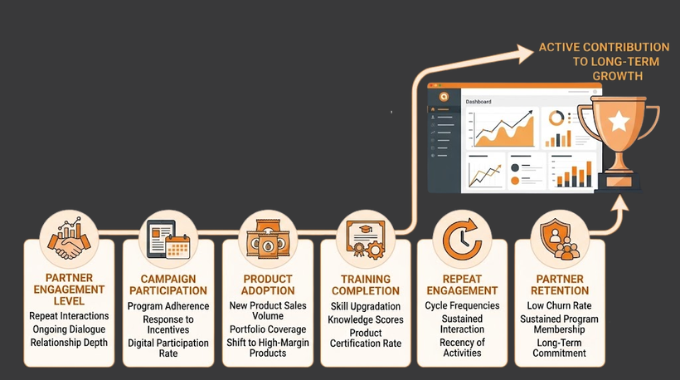
Important indicators include partner activity levels, campaign participation, product adoption, training completion, repeat engagement, and partner retention. These insights help brands understand not only who is buying but who is actively contributing to long-term growth.
The Future of Agriculture Loyalty Programs in India
The future of agriculture channel management will be defined by stronger collaboration between brands and their partners. As competition increases, companies will need to move beyond seasonal schemes and create continuous engagement systems. Future-ready agriculture loyalty programs will combine:
- Relationship building
- Personalization
- Partner intelligence
- Recognition
- Digital engagement
The brands that understand their channel ecosystem better will have a significant advantage. Distribution reach helped agriculture companies grow in the past. Channel engagement will define the next stage of growth.
Conclusion
Agriculture has always been a relationship-driven industry. But the way brands build and maintain those relationships is changing.
The next generation of agriculture loyalty programs will not depend only on bigger incentives or seasonal schemes. They will focus on understanding partners, improving engagement, and creating stronger business relationships.
Successful brands will be those that combine traditional trust with modern engagement strategies. Because in agriculture, a strong channel network is not only a distribution advantage. It is a long-term growth advantage.
Frequently Asked Questions
What is an agriculture loyalty program?
An agriculture loyalty program is a structured channel engagement initiative that helps brands build stronger relationships with distributors, dealers, retailers, and other partners through rewards, recognition, communication, and performance-based activities.
How do agriculture loyalty programs improve dealer engagement?
Agriculture loyalty programs improve dealer engagement by creating continuous interactions beyond seasonal sales schemes. They help brands strengthen relationships through personalized communication, recognition, training, and meaningful partner experiences.
Why are traditional agriculture dealer schemes not enough?
Traditional dealer schemes mainly focus on sales incentives. While they help achieve short-term targets, brands need continuous engagement strategies to improve partner loyalty, product adoption, and long-term preference.
How can technology improve agriculture channel loyalty programs?
Technology helps agriculture brands analyze partner behavior, personalize engagement, automate program management, and identify opportunities to improve channel relationships.
Which agriculture companies can benefit from loyalty programs?
Seed companies, fertilizer manufacturers, agrochemical brands, irrigation companies, and farm equipment manufacturers can use loyalty programs to strengthen their dealer, retailer, and distributor networks.